4-weeks Technical Certificate Training $159 USD
8-weeks Technical Certificate Training $500 USD
12-weeks Technical Certificate Training $1000 USD
2-Days Solar Buyer and Home owner Protection Workshop $99 USD
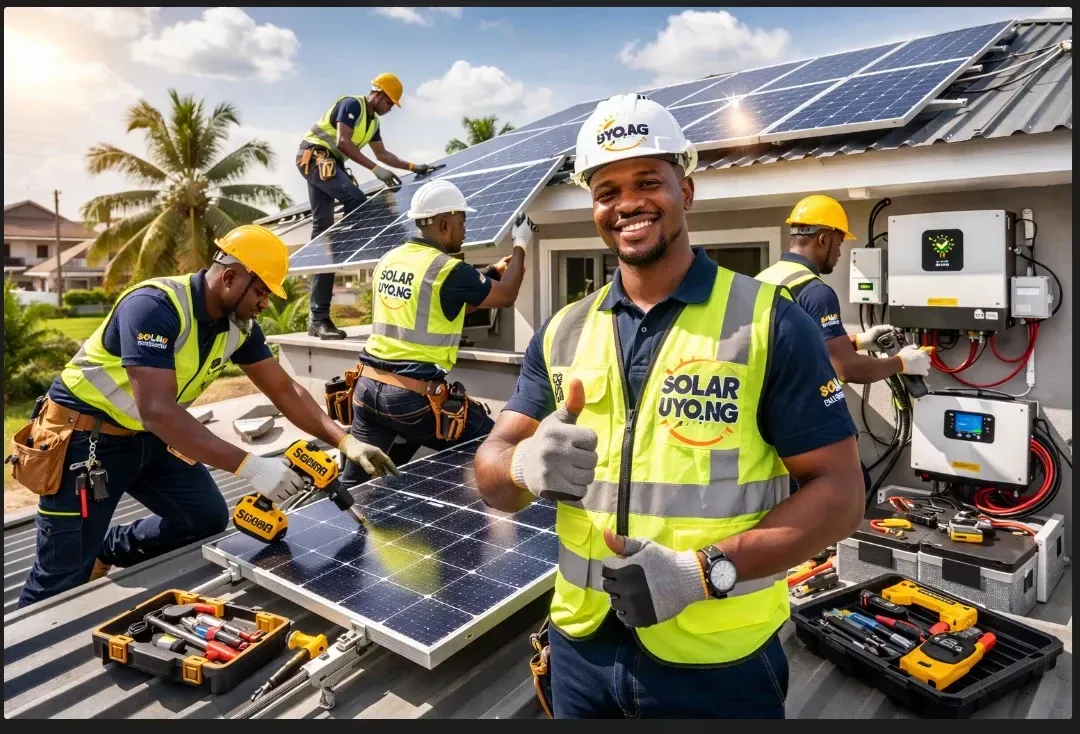
SolarUyo.ng Training Center
Forging Nigeria’s Best Solar Technicians
In Akwa Ibom and across Nigeria, solar energy is more than just a convenience—it's the key to unlocking reliable power for our homes and businesses. But a solar power system is only as good as the person who installs it. We've all heard the stories: systems that fail prematurely, installations that damage property, and technicians who disappear when you need them most. This is why we created the SolarUyo.ng Solar Installer Training Program—to put an end to uncertainty and set a new standard for excellence.
Our mission is to build a new generation of highly skilled, professional, and trustworthy solar technicians. We believe that the fastest way to build trust is by ensuring every single installation is safe, reliable, and expertly handled from start to finish. For homeowners and business owners, this program is your assurance that a SolarUyo.ng certified installer has the proven expertise to protect your investment. For aspiring technicians, this is your opportunity to build a rewarding career on a foundation of true skill and confidence.
This intensive 3-Month (12-Week) curriculum is designed to transform eager learners into field-ready professionals capable of designing, installing, testing, and maintaining solar systems for homes and small businesses. It’s not just about theory; it’s about hands-on mastery.
Month 1: Building the Foundation
— Solar Fundamentals & Electrical Basics
The journey to becoming a top-tier solar installer begins with a rock-solid understanding of the fundamentals. During the first month, our trainees dive deep into the science behind solar energy and the essential principles of electricity. This isn't just classroom learning; it's about building the core knowledge needed to make smart, safe decisions on every future project. By mastering these basics, technicians learn to respect the power they're working with and ensure every connection, wire, and component is perfectly suited for the job.
Week 1: Introduction to Solar Energy
- Topics: We start with the essentials: how solar energy works, how photovoltaic panels convert sunlight into electricity, and a complete overview of every component in a solar system. We also explore the growing solar market opportunities in Nigeria and establish safety as our number one priority.
- Hands-on: Trainees get their hands on actual solar components, learning to identify each part and its function. They use multimeters to perform essential panel voltage tests.
- Example Exercise: Students measure the Open-Circuit Voltage (Voc) and Maximum Power Voltage (Vmp) of a 710W solar panel to understand its real-world performance.
Week 2: Electrical Basics for Solar Installers
- Topics: Trainees learn the language of electricity: DC vs. AC power, voltage, current, and resistance. We cover Ohm's Law and the critical differences between series and parallel wiring, which directly impacts system performance and safety, along with proper wire sizing to prevent voltage drop.
- Hands-on: The theory comes to life as students build simple DC circuits and practice wiring solar panels in both series and parallel configurations.
- Example Scenario: A customer needs a 24V battery system with two 710W panels. Students must determine the correct wiring method to achieve the target voltage and calculate the expected output.
Week 3: Solar Panels and Mounting Systems
- Topics: We explore the different types of solar panels—Monocrystalline, Polycrystalline, and Bifacial—and how to interpret their specification sheets. Trainees also learn the mechanics of securely fastening panels to various surfaces using roof and ground mounting systems.
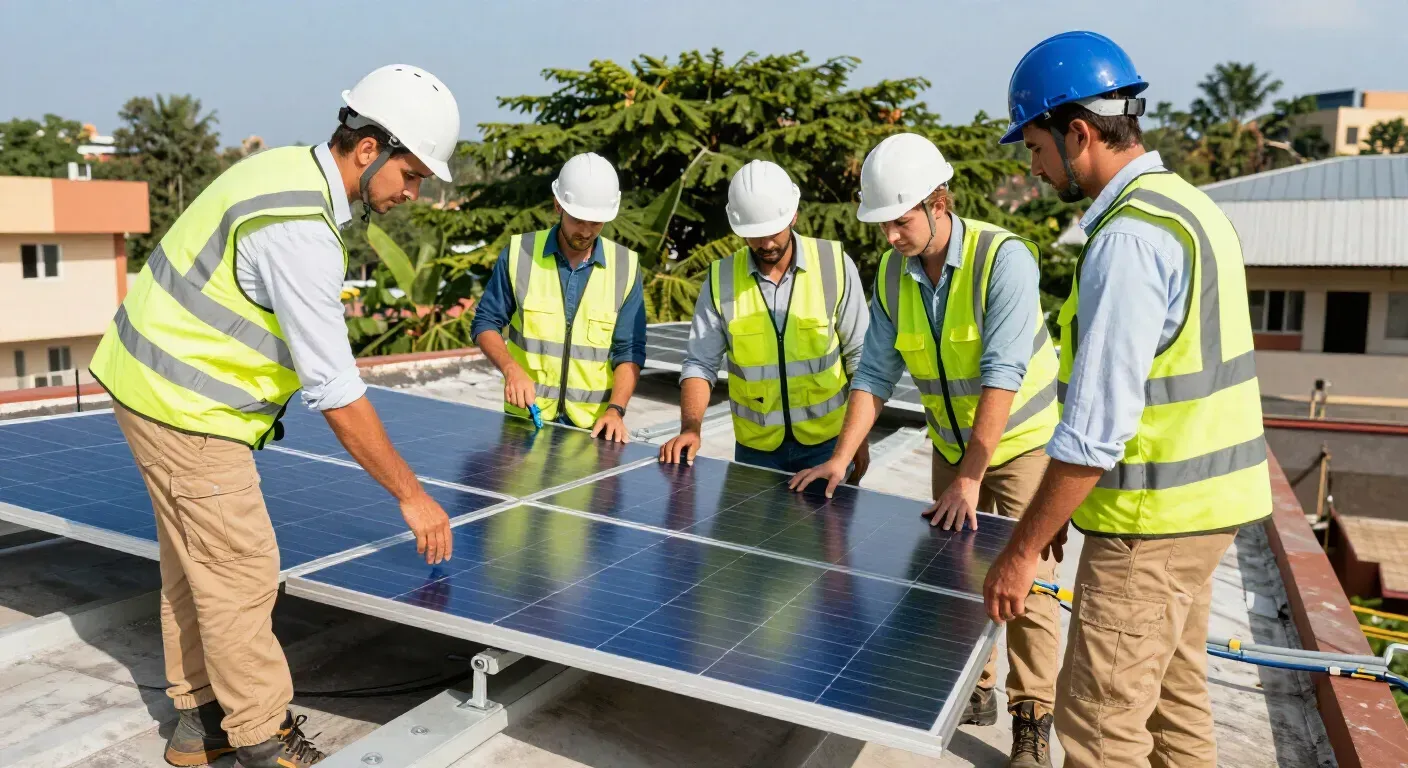
- Hands-on: Students get on the roof (in a safe, controlled environment) to install mounting rails, learning how to achieve the proper panel orientation for maximum sun exposure.
- Example Scenario: A customer's roof in Uyo faces south-west. Our students must calculate the optimal tilt angle and best panel placement to maximize energy generation throughout the day.
Week 4: Batteries & Energy Storage
- Topics: A solar system's reliability often depends on its batteries. Trainees learn the pros and cons of Lead-Acid vs. Lithium batteries, how to calculate battery capacity based on a client's needs, and the importance of understanding the depth of discharge for battery longevity. Battery safety is heavily emphasized.
- Hands-on: Students practice connecting batteries in series and parallel and learn to install and configure a battery management system (BMS) to protect the energy storage unit.
- Example Exercise: A customer's daily energy consumption is 2kWh. Trainees must calculate the precise battery bank size required to meet this need reliably.
Month 2: From Theory to Practice
— System Design & Installation
With a strong foundation in place, the second month is all about building complete, functional solar systems. This is where trainees learn to think like engineers, designing solutions tailored to each client's unique energy needs. They move from handling individual components to integrating them into a seamless, efficient system. Every lesson is focused on the practical skills needed to perform a flawless installation, from sizing the inverter correctly to ensuring every wire is neatly and safely routed.
Week 5: Inverters & Charge Controllers
- Topics: We cover the "brains" of the solar system: the different types of inverters (Hybrid, Off-grid, Grid-tie) and charge controllers (MPPT vs. PWM). Students learn how to properly size these critical components to match the solar array and the home's energy demand.
- Hands-on: Trainees configure a hybrid inverter, connecting the PV input and programming it for optimal performance.
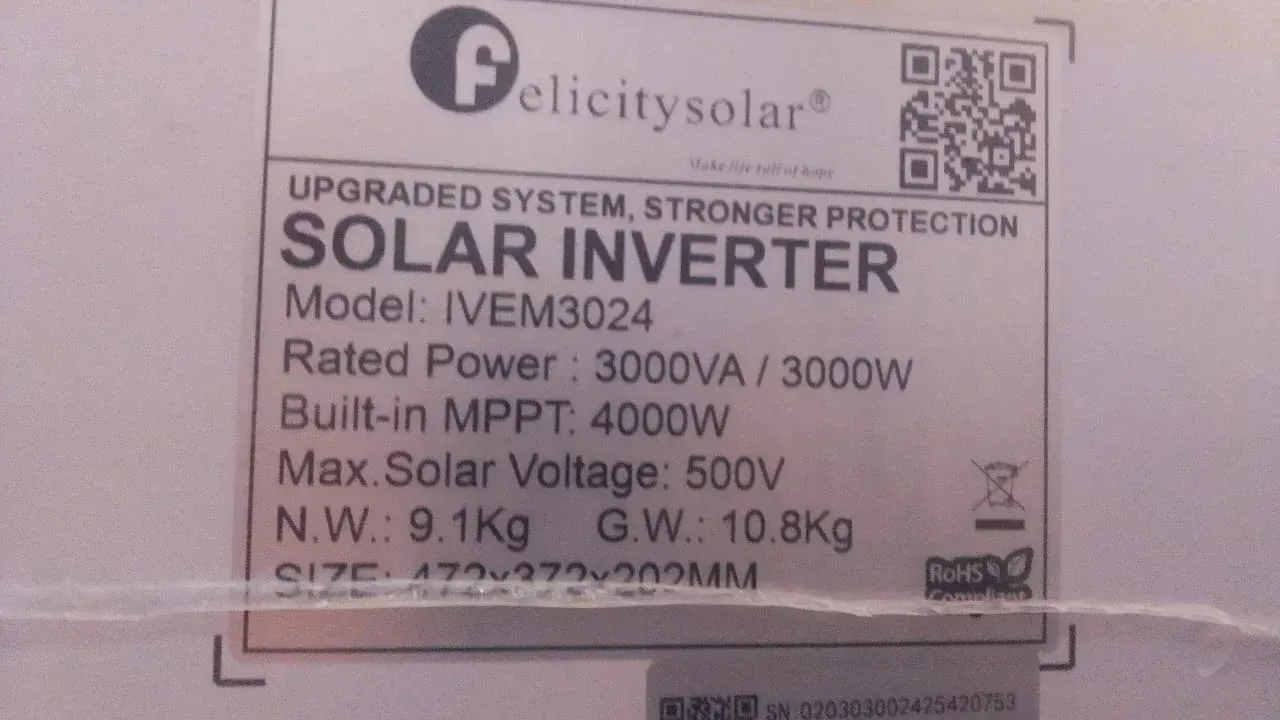
- Example: Given a 3kW inverter and four 710W panels, students must calculate the total PV voltage and confirm it is compatible with the inverter's MPPT specifications.
Week 6: Solar System Sizing
- Topics: This is one of the most crucial skills. Trainees learn how to conduct a thorough load assessment to understand a customer's energy usage. They use this data to accurately calculate the required number of panels and the right size of the battery bank.
- Hands-on: Students are given a real-world scenario—a small shop with a fridge, TV, lights, and a fan—and must design a complete solar system from scratch.
- Example Output: Based on their calculations, the students propose a full system: 4 panels, a 3kW inverter, and a 200Ah lithium battery.
Week 7: The Complete Installation Process
- Topics: Safety is paramount. We drill down on roof safety protocols, proper cable routing techniques, and the use of combiner boxes. Students also learn about vital protection systems, including surge protectors and earthing.
- Hands-on: This week, trainees install a full solar system in our training facility, including panels, inverter, batteries, DC isolators, and AC breakers, putting all their knowledge together.
Week 8: Wiring & Protection Systems
- Topics: We focus on the safety components that protect both the system and the home. This includes the proper installation of circuit breakers, Surge Protection Devices (SPDs), earthing rods, and lightning protection systems.
- Hands-on: Trainees get practical experience installing DC isolators, wiring an AC distribution board, and implementing a proper grounding system.
- Example Scenario: To understand the importance of protection, we simulate a lightning surge that damages an unprotected inverter. Students then learn to install an SPD to prevent such damage.
Month 3: Real-World Mastery & Business Skills
The final month is where everything comes together.
Trainees transition from the controlled environment of our workshop to the complexities of real-world scenarios. They learn not just how to install a perfect system, but how to diagnose and fix problems when they arise. We also equip them with the business and customer service skills needed to be true professionals, ensuring they can communicate clearly, manage projects effectively, and represent the SolarUyo.ng standard of quality on every job.
Week 9: Troubleshooting Solar Systems
- Topics: Even the best systems can have issues. We teach trainees how to diagnose common faults like zero PV input, a battery that isn't charging, overload shutdowns, and blown fuses.
- Hands-on: Trainees are presented with real, malfunctioning systems and must use their skills to troubleshoot the problem.
- Example Scenario: An inverter is showing a "0 PV input" error. Students must systematically diagnose the issue, checking everything from the wiring connections to the MPPT voltage.
Week 10: Solar Pumps & Specialized Systems
- Topics: We go beyond standard residential setups to cover specialized applications, such as solar water pumps for agriculture and systems designed to handle high-surge loads from equipment like welders or large motors.
- Hands-on: Trainees install a 0.75kW solar pump and learn how to integrate a soft start controller to manage its power demands.
- Example Scenario: A pump keeps blowing the inverter's fuse upon startup. Students must identify the cause (the initial power surge) and propose the correct solution.
Week 11: Customer Installation Projects
- Tasks: Under the close supervision of our expert instructors, students perform a real installation for a local customer. They handle the entire process: conducting the initial site survey, designing the system, performing the installation, and testing it.
- Example: Trainees are assigned to install a complete solar system for a beauty salon in Uyo, giving them invaluable field experience.
Week 12: Certification & Professional Development
- Topics: We finalize their training with crucial business skills. This includes proper solar installation documentation, exceptional customer service, managing warranties, and offering maintenance plans.
- Business Skills: Trainees learn how to accurately prepare quotes for solar projects, market their services, and generate leads.
- Final Project: As a final test, each student must install a complete solar system from start to finish, including all panels, inverter, batteries, and protection devices, demonstrating their mastery.
The SolarUyo.ng Certification: Your Seal of Trust
Upon successful completion of the final project, graduates earn the SolarUyo.ng Certified Solar Installer credential. This isn't just a piece of paper; it's a guarantee of quality. It signifies that the technician has been rigorously trained and tested in solar design, installation, troubleshooting, and maintenance. When you hire a SolarUyo.ng certified professional, you’re not just getting an installer—you're getting a partner dedicated to providing you with a safe, reliable, and long-lasting solar energy solution.
Our investment in top-of-the-line training equipment—from high-efficiency 710W solar panels to 3kW hybrid inverters and 200Ah lithium batteries—ensures our technicians train on the same quality components they will install in your home or business. Don’t leave your energy future to chance. Choose a certified expert who has been trained for excellence and is committed to your satisfaction. Contact us today to be connected with a SolarUyo.ng Certified Solar Installer in your area.
Creative Director
Hello, I'm Dr. PeterA.
Welcome to my Solar Uyo.Ng
Center Training Videos


Companies we work with
These are just a few of the partners we work with.


Let’s create together
4.9 out of 5
based on 68 Reviews
Claim your 20% discount
Your information is 100% secure.
