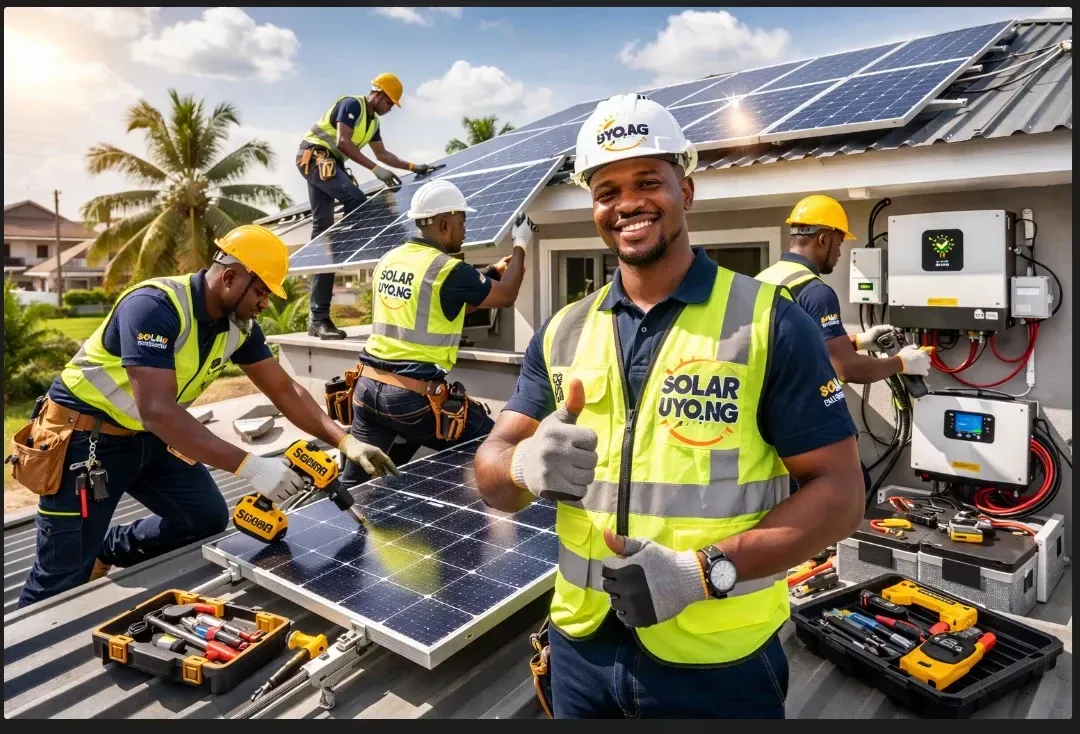
Earth-Rod Grounding your Solar System is critical to avoid Ligtning Fire
Solar Grounding: The Safety Feature Everyone Ignores
Solar Grounding: The Safety Feature Everyone Ignores
Hey guys, it's Peter here, and in today's discussion we're talking about something that's often overlooked but absolutely essential to the safety and performance of your solar system: grounding.
If you've ever seen those thin green or bare copper wires connected to your solar rails or combiner boxes and wondered what they're for, this video is for you. And even if you've never thought about it before, stick around — proper grounding and bonding is one of the most important safety features in your entire solar system. Whether you installed your panels yourself or hired a contractor, it's worth understanding what grounding does, how to check whether yours was done correctly, and which common mistakes to avoid.
Why Grounding Matters
At its simplest, grounding is about safety. It provides a controlled path for unwanted electricity — whether from a lightning surge, a short circuit, or static discharge — to travel safely into the earth instead of through your home, your inverter, or you.
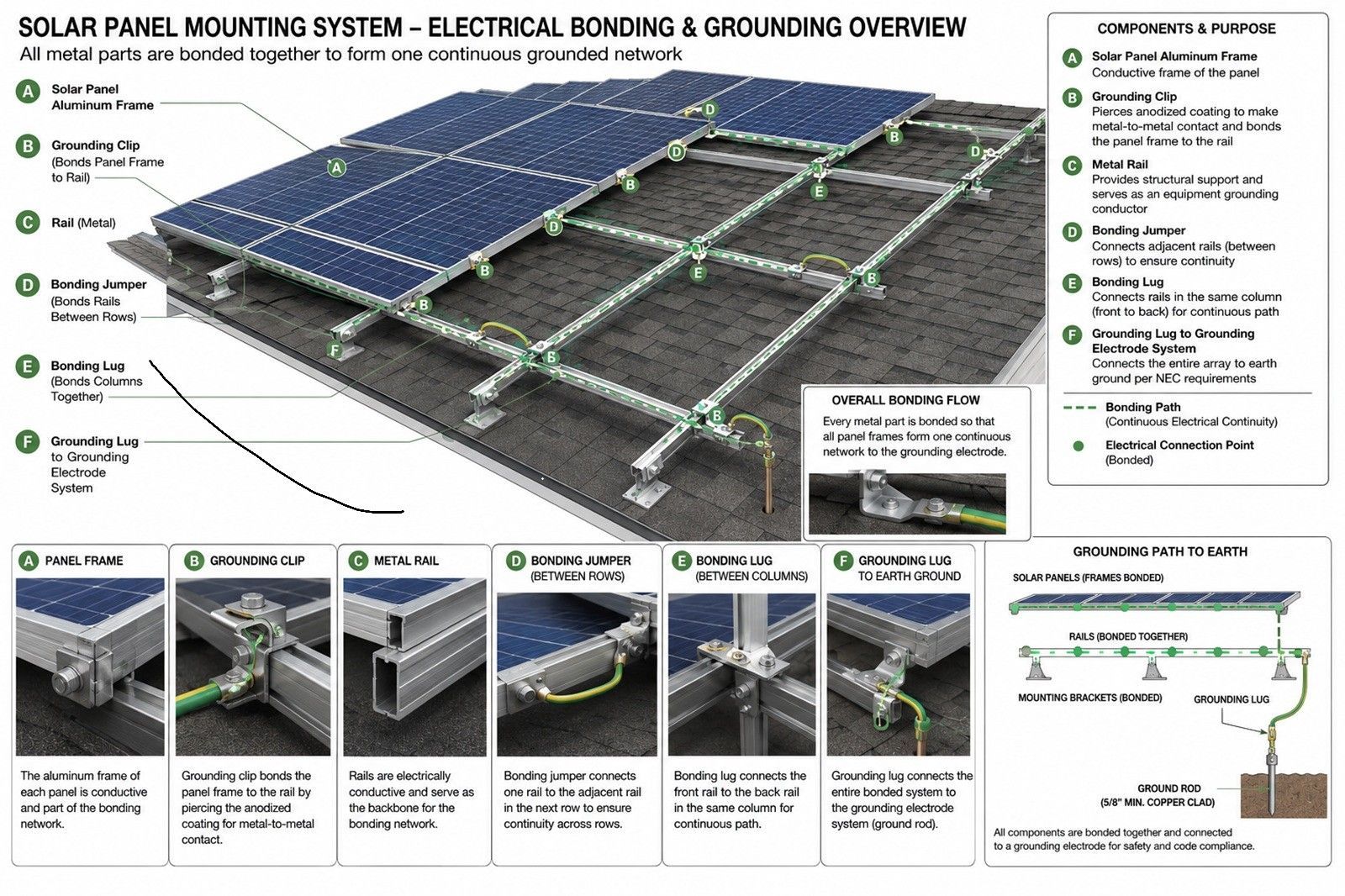
Grounding and bonding are two sides of the same coin, and they're often confused. Bonding connects all the metal parts of your solar system together — rails, racking, conduit, and inverter cases — so everything sits at the same electrical potential. Grounding then connects that entire bonded system to the earth, a safe destination where fault current can dissipate.
Without it, a lightning strike or even a small wire-insulation failure could energize the metal frame of your solar array, and anyone touching it could receive a serious shock. This is exactly why the National Electrical Code — specifically Article 250 and Section 690.43 — requires every metal part of a PV system to be properly bonded and grounded.
A lot of people also confuse grounding with lightning protection. Grounding your solar system doesn't make it lightning-proof; it simply gives lightning or fault current a safe path to dissipate. A true lightning protection system involves separate components, like air terminals (lightning rods) and surge protection devices. Your PV grounding, on the other hand, mainly manages induced voltage and static buildup — still critical, just a different job.
How the System Is Built
Every solar panel is mounted on a metal frame, and those frames attach to metal rails, which are bolted to your roof. Each of these metal parts needs to be bonded together electrically. This is done with grounding clips and bonding jumpers, along with grounding lugs between rows and columns, so that every panel frame forms one continuous bonded network.
From there, a grounding conductor — typically a bare or green copper wire — connects all the bonded rails to the equipment grounding bus inside the inverter or combiner box. Wire size depends on the circuit. For example, on a 13 kW system, the DC string side might use #10 AWG copper ground wire, while the AC side, from the inverter to the disconnect and load center, might use a heavier #8 AWG wire.
All of this eventually ties back into your home's main grounding electrode — the same one your main electrical panel uses. If you have panels on multiple roof sections (say, south- and west-facing arrays), each section gets its own bonding jumper and appropriately sized ground conductor. Everything then comes together at the inverter or combiner box before tying into the main house ground.
The Ground Rod
The grounding system ultimately connects to your main service grounding electrode — usually a ground rod or a Ufer connection (a concrete-encased electrode). A few important rules:
- The ground rod must be at least 8 feet long and driven fully into the earth.
- It can be copper or galvanized steel.
- Aluminum wire must never touch soil or concrete — this is explicitly prohibited by NEC 250.64(A).
- If you install a separate ground rod for your solar array, it must still be bonded back to your main house grounding system with a continuous copper wire. Never leave it isolated.
If separate ground points aren't bonded together, you can create a dangerous difference in electrical potential between your house and your solar array — exactly what proper grounding is meant to prevent.
Common Mistakes (Even From Professionals)
- Not scraping paint or anodizing off bonding surfaces. If the metal-to-metal contact isn't bare, it doesn't matter how tight the bolt is — it's not bonded.
- Using the wrong wire size. Grounding conductors are commonly #6 or #8 copper for rooftop PV, but the correct size depends on system amperage and local code.
- Using unlisted grounding hardware. You can't use a random lug or self-tapping screw. Grounding components must be UL-listed for bonding, meaning they've been tested to carry fault current safely without melting or detaching.
- Not bonding all metallic equipment — racking, conduit, combiner boxes, and even metallic roof flashing in contact with the array.
- Forgetting to bond the sub-panel or inverter ground to the main house ground. This is a common inspection failure. Many DIY systems end up with the solar array grounded separately from the home, which is unsafe and violates NEC requirements.
How to Check Your System
- Do a visual inspection. Look for the bare or green copper wire running along the rails or conduit — this is often what city inspectors check for, sometimes via close-up photos if they don't get on the roof themselves.
- Check for bonding clips or grounding jumpers between rails. You should see small stainless-steel teeth biting into the aluminum. If you don't see them, the rails may not be bonded.
- Have a city inspector check the work, if you hired a professional. Inspectors know what to look for and confirm the work meets code.
Grounding vs. Rapid Shutdown
These two are often mixed up. Rapid shutdown (NEC 690.12) is designed to make the system safe for firefighters by cutting voltage at the array level when the power is off. It is not the same as grounding — even a system that meets rapid shutdown requirements must still be properly grounded. They serve two separate purposes.
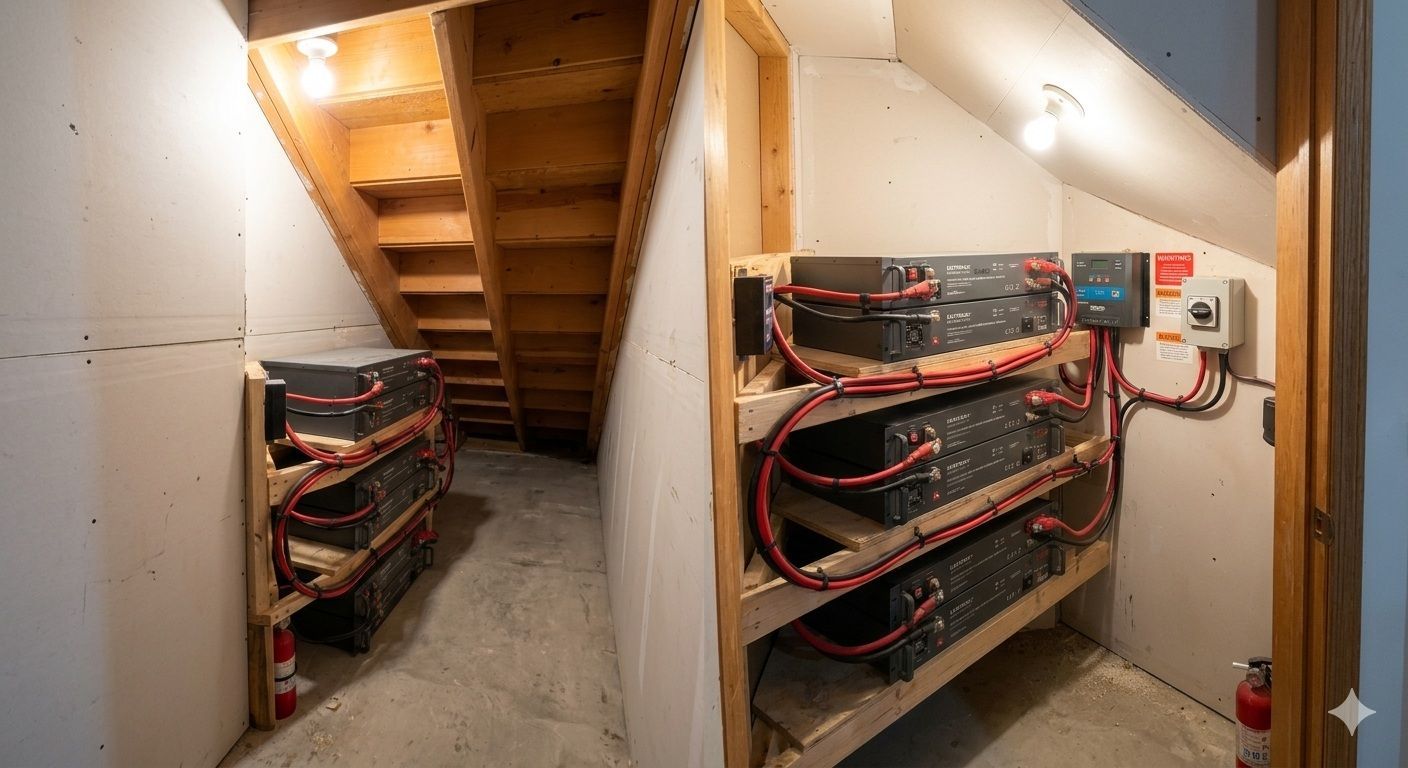
This also applies to battery storage. If you have a hybrid inverter or battery system (Tesla Powerwall, Franklin, SolarEdge, etc.), each battery has its own internal ground reference that must tie into the same grounding electrode as the rest of the system. Never leave a battery ground floating or connected to a separate, unbonded rod.
What Happens If You Skip Grounding
If a system isn't grounded correctly, a single insulation failure — even a nicked wire or water intrusion — could energize the entire metal frame of the array at full voltage. Touching it could cause electric shock, equipment damage, or fire. From an insurance standpoint, improper grounding can void your policy or warranty, since it's both a code violation and a known safety hazard.
Grounding is one of those things you only notice when it's missing — and by then it can be too late. If you're DIYing your system, do your research. If you're hiring an installer, make sure they're insured, licensed, and well-reviewed. Many roofers enter the solar business without a solid grasp of electrical work, which can cause serious problems down the road. Don't cut corners on grounding.
A Quick DIY Checklist
- Every rail has a grounding clip or jumper.
- The copper wire runs continuously to the main ground bus.
- No aluminum wire is in contact with soil.
- There's a green screw or grounding bar inside the inverter, tied into the same house ground.
- Ground wires are never disconnected while the system is energized — always shut off the inverter and AC disconnects first.
A Real-World Example
One system we serviced last year had intermittent inverter faults. It turned out the original installer never bonded the two roof arrays together, leaving a one-volt potential difference between them — just enough to cause a ground fault during rain. Once we added a bonding jumper and tied it into the main ground, the issue disappeared completely. A small detail, but it made a big difference.
The Takeaway
Grounding keeps you, your home, and your investment safe. It gives fault current a safe path to the earth instead of through your system — or you — helps stabilize voltage, reduces risk during lightning strikes, and ensures your system meets code and passes inspection.
If you're ever in doubt, ask your installer how your system is grounded and bonded. A professional should be able to explain the path from your panel frame all the way down to the main grounding electrode. Grounding isn't optional, and it's not just about passing inspection — it's about safety, longevity, and peace of mind.
Click here to Join a Free Workshop for more information